AI Music Composition: New Rules for Creatives
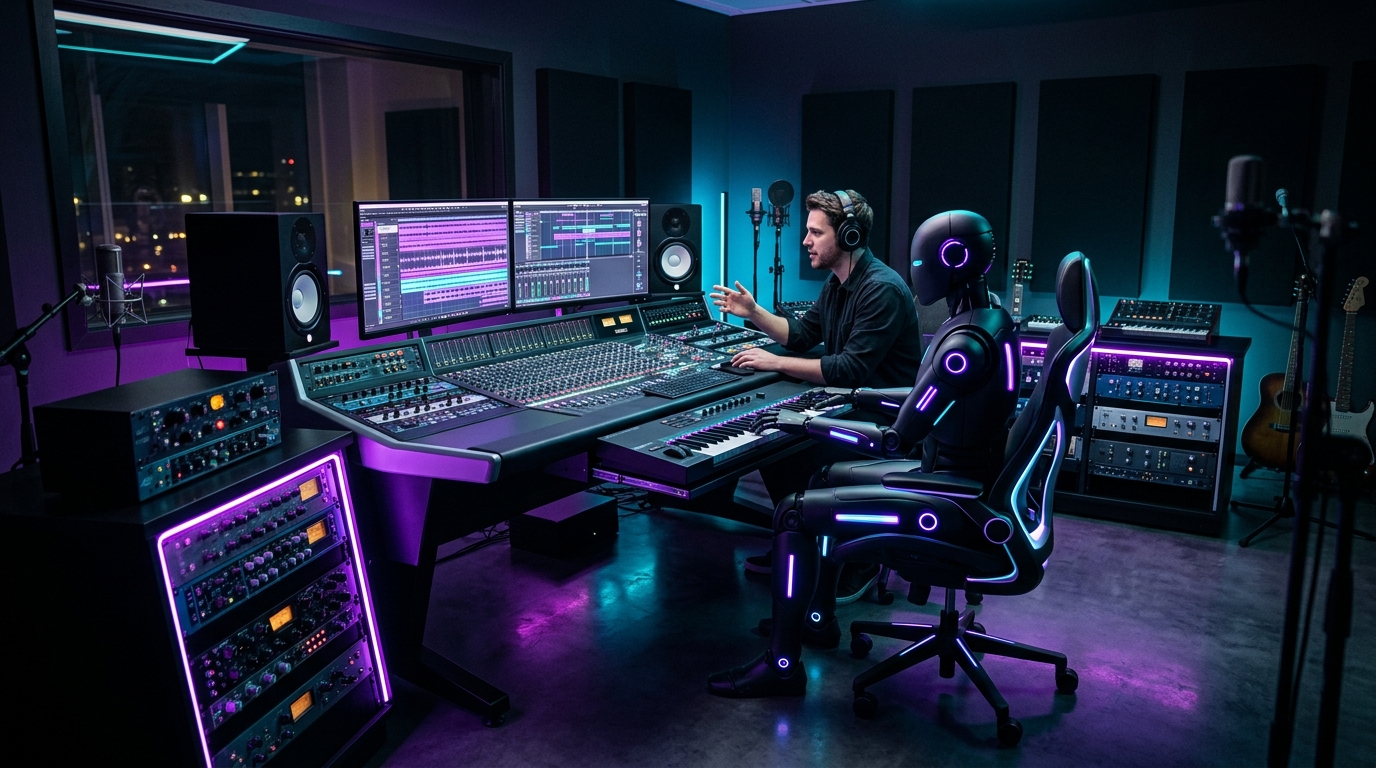
Navigating the Evolving Landscape of Artificial Intelligence in Music Production
Artificial intelligence in music refers to computational systems capable of generating, analyzing, or manipulating musical elements autonomously. This rapidly evolving field encompasses everything from advanced sound design to full-fledged **AI music composition** and intricate arrangements, fundamentally altering traditional creative workflows.
For artists and producers, understanding these technologies is no longer optional. AI introduces new paradigms for creativity, production efficiency, and, critically, necessitates a re-evaluation of legal frameworks surrounding ownership and distribution, leading to new rules for the entire industry.
The Creative Frontier: AI Music Composition and Songwriting
The advent of sophisticated **AI music software** has democratized complex compositional techniques. These platforms empower users to generate melodies, harmonies, rhythms, and even entire orchestral arrangements with unprecedented speed and variety. Tools range from algorithmic generators to neural networks trained on vast musical datasets.
Artists can leverage AI for **AI songwriting**, assisting with lyric generation, chord progression suggestions, or even creating complete instrumental tracks as a foundation. This provides significant **AI music opportunities** for rapid prototyping and exploring creative avenues that might be time-prohibitive with traditional methods.
Many **AI tools for musicians** now offer intuitive interfaces, making advanced sound manipulation and generation accessible. They serve as powerful assistants, augmenting human creativity rather than replacing it, pushing the boundaries of what is musically possible for both seasoned and emerging talents.
Regulatory Frameworks: AI Music Licensing and Copyright
The rapid advancement of AI in music presents significant legal and ethical dilemmas, particularly concerning intellectual property. **AI music regulations** are still in their nascent stages, with existing copyright laws struggling to encompass AI-generated content.
Key questions revolve around who owns the copyright for AI-composed music. Is it the developer of the AI, the user who prompts it, or is the content considered public domain? This ambiguity complicates **AI music licensing** for generated tracks, affecting how revenue is distributed and how originality is defined.
For **record labels and AI**, navigating these uncharted waters is critical. They face challenges in identifying the origin of musical works, ensuring proper clearance, and adapting their business models to account for AI-assisted or entirely AI-generated content. Establishing clear guidelines for attribution and ownership is paramount for industry stability.
Impact and Challenges for the Music Industry
The overall **AI impact on music** is multifaceted, bringing both transformative potential and considerable challenges. For **AI for music producers**, these tools offer unparalleled efficiency in tasks like mixing, mastering, and sound design, streamlining workflows and reducing production costs.
However, the ethical considerations and potential for job displacement represent significant **AI music challenges**. Debates surrounding the originality and artistic merit of AI-generated music continue. Ensuring fairness for human creators while integrating AI innovations is a delicate balance the industry must strike.
Ultimately, the integration of AI will redefine roles within the music ecosystem. Artists and producers who adapt by mastering these new tools, understanding their limitations, and engaging with the evolving regulatory landscape will be best positioned for success in this new era.
How is AI music creation regulated currently?
AI music creation currently operates within a largely unregulated space, with existing copyright laws struggling to precisely define ownership and rights for content generated by artificial intelligence. Discussions are ongoing globally to establish frameworks for **AI music regulations** and licensing.
What are the primary opportunities for artists using AI music tools?
Artists can leverage **AI tools for musicians** for rapid ideation, overcoming creative blocks, generating diverse musical elements, and streamlining production processes. This offers **AI music opportunities** to experiment with new genres, create unique soundscapes, and produce high-quality music more efficiently.
How do record labels approach AI-generated music?
Record labels are cautiously exploring **record labels and AI** integration, recognizing both the innovation and the complex legal challenges. They are focusing on understanding copyright implications, developing new **AI music licensing** models, and evaluating the commercial viability and artistic integrity of AI-assisted or generated content.
Spectraloom Staff
The texts and all content on this blog are generated with the assistance of AI.